


Advertisement
SPONSORED CONTENT
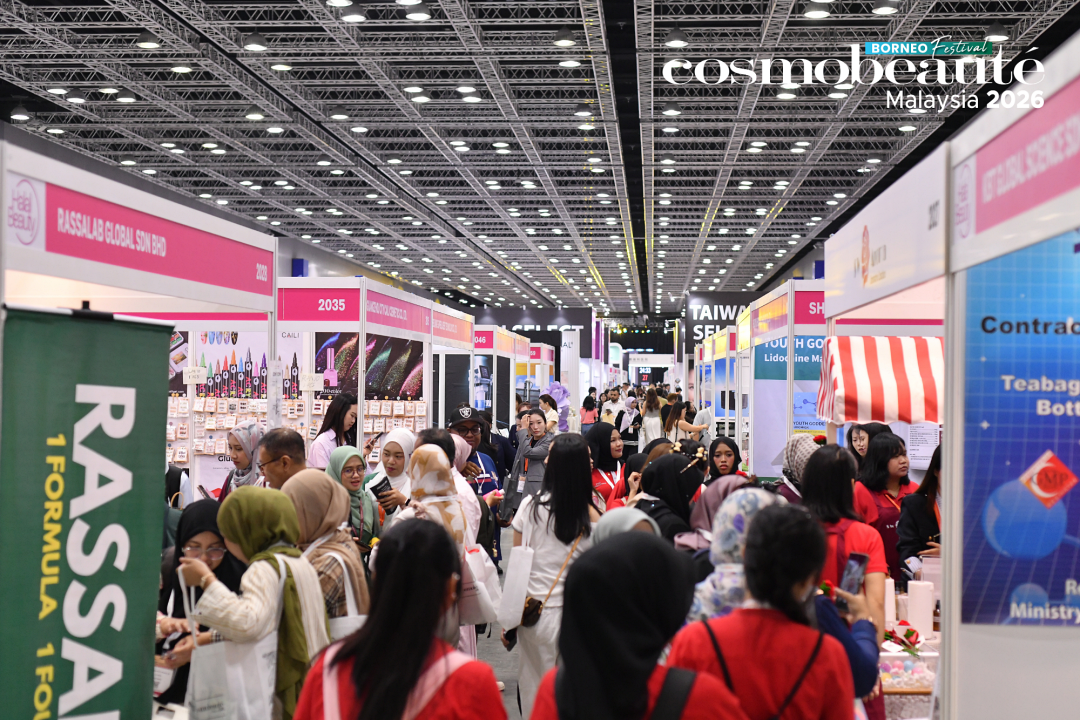
Cosmobeauté Malaysia and beautyexpo will expand into East Malaysia with the launch of the Cosmobeauté Malaysia Borneo Festival 2026 at the Sabah International Convention Centre (SICC) from May 25 to 26.
Advertisement
Advertisement

Jeffrey speaking at the ‘Black Sunday’ protest last year in Kota Kinabalu against the implementation of Temporary Sabah Pass (PSS).
Q. Would you introduce a racial quota in filling state civil service jobs for sake of fairness and ethnicity since Sabah has many ethnic groups? A: It is very difficult to put quota on every ethnic group because there are so many. I think you have to look at it in two ways. One is to use the meritocracy as basis so that we got quality people. It doesn’t matter what ethnic groups that is one. Second, you have to have a guided policy to create a balance. Balance between basically Muslim and non-Muslim because you cannot really go into each one. And maybe between Bumiputra and non-Bumiputra. But this to me should be a policy that is not there forever but maybe look at it as a 10 or 20 year policy and after that we drop all the religious or racial thing and we go for meritocracy. That is how I look at it. Then we will get the best people in the service not because they are Dusun, or Malay, or Bajau or Chinese, no ... but they are good at it. Q: Would your government focus on PR for Malaysians as there are hundreds of cases of Peninsular Malaysians waiting for their PR. A: Yes. We are in Malaysia, we have policies, we have constitutional rights on citizenship. But at the same time, as we are Malaysians we have to have this policy of permanent stay for all other Malaysians. In fact, rather than opening to foreigners, why not to other Malaysians. Q. Sabah’s strategic position vis-à-vis China, Japan and South Korea puts if at greater advantage for international shipping than peninsula Malaysia. This will improve our economy without relying on Malaya too much as well as ensure more jobs for locals. Would this be a priority for your government? A: Yes it is. Our economy can only open up and progress if we look at Sabah and activate Sabah as a strategic centre for trade and shipping because we are in a strategic location. We are surrounded by our markets. But we cannot deal with it as long as we continue to rely on Port Klang. So my proposal, I have actually written to the prime minister on this, to allow a second international container port in Sabah. Now we have Port Klang and we should have one here in Sabah because we are in the international trading routes and we are near to all these big markets. So we must have a second international container port in Sabah with that then we are near to the market, import and export, we can become an international container port. What we need to do in order to realise that in order for ships to come in here to load and unload is to improve the facilities, to improve our infrastructure, to improve our economic activities so that we can have products in huge volumes to be processed here and to be put onto the ship to be exported. Right now, we are not doing that, we are actually constraining the development of our economy because first our infrastructure is very poor, second, we don’t have an international container port, and third we have this Cabotage policy. So how do we develop Sabah? As long as we continue to be like that, we will be left behind and yet we have that highest potential, the biggest potential is in Sabah if we open up say the second international container port in Sabah, then we have good infrastructure to all the districts that are producing including say the interior, Keningau we should have an internal port there to export their products there directly from the train into the ship. The Customs will be there. But how do we do that because you have mountains and we have to spend a long distance, so I think we can create a tunnel there which shorten it to maybe eight to 10 kilometres only and that would speed up the journey, open up the activities in the interiors because in the interior we have huge land areas, agriculture areas. We have huge tourism potential as well. We need to do that and connect to Sandakan, Tawau, Lahad Datu , to Kudat, Kota Belud and so on. We must put this as a separate priority. Q: Sabah is doing much better in tourism but infrastructure-wise, we are not comparable to Sarawak the past 10 years. What would you do to ensure our fullest potentials are not wasted? A: Well, we need to develop our infrastructure and in order to develop our infrastructure we must have the funding. In order to have the funding and the support, we need to work with the Federal Government. So this is why the State Government and the Federal Government must be in tune. They must be the same group of government so that they can support each other. This infrastructure requires huge funding, not only that, it requires new ideas, new strategies and we need initiatives. The leaders must have initiatives to plan and look at what is needed. You must have an economic development mind in order to do that. Right now, everybody is more focused on politics rather than on development. The second thing is we must get back some of our revenue rights in the Constitution. As stipulated by Article 112C,D in the Federal Constitution the 40 per cent revenue. We must have a better share of the oil revenue so that we also can do much more than what we can do now because right now we only have four or five billion, the most in State revenue. But if we have constitutional rights, we will have more than 10 billion a year in State revenue. Maybe between 10 and 20 billion, that would be huge, we can do a lot because we need the money to develop all the potential wasted areas in Sabah. Even the villages, if we development the villages, they contribute to the develop of the districts and the districts will contribute to the development of the State and the State will contribute to the development of Malaysia. Q: Sabah is the second biggest state in Malaysia and can accommodate 10 peninsula states in land area. But these 10 states have their own State Governments compared to one State Government resulting in allocations and resources having to be shared by all these districts. In the light of this is it not better to administratively separate Sabah in terms of East, North West and South (as in Kalimantan) for better development efficiency? A: Yes we can do better than that. In fact I have always advocate that. That Sabah and Sarawak should be further divided into regional states equivalent to the states in peninsula. Because right now we are treated as one unit. Sabah is one unit. In Semenanjung they have 11 units, maybe 12 now with the Federal Territories. That is not fair. Even our districts are bigger than some of the states. So the idea that we are trying to introduce is to relook at the residency as a boundary to develop the State, regional development based on the residency system. I have proposed that in Sabah, we should have five or six regional governments. Whether you call it residency or province it doesn’t matter or even states. But we need to do that otherwise we continue to be treated as a unit when we represent 10 units in peninsular and Sarawak even more. I notice that even the television does not portray the reality of Sabah and Sarawak within Malaysia. If you look at the map, sometimes in the background, they put Malaya bigger than Sabah and Sarawak. That is wrong. Why they do that? Maybe because they think Sabah is a state just like a state in peninsula. Sabah and Sarawak were partners in the formation of Malaysia and we are independent states. We have special conditions. We are huge. So we should look at this as three regions, three partners. Therefore, it is appropriate that we create regional systems, break Sabah into regional systems , administrative system or development system, residency or provinces in order to speed up the development and we need to do that quickly. What we need now is the Federal Government, peninsular leaders to appreciate that. I have said this in parliament. Hopefully now that I am in government at the Federal level, I can convince our Federal leaders to look at it from our point of view, not just from their conventional view of looking at Sabah and Sarawak. Q: The unemployment rate in Sabah is one of the highest in the country. This was made worse with the Covid-19 pandemic. What steps would you take as Chief Minister to reduce it in the next four years? A: Well, the first thing that we need to do is to find out the facts. The facts about our unemployment, where are they, what are they, what is the problem with them. Second, we look at our potentials. Potential in agriculture, potential in our development, potential in our industries. We need to activate all these in order to create job opportunities. And if we can activate all the sectors, agriculture sectors, the industry and trade sectors, the manufacturing sectors, the tourism sectors, and also don’t forget the technology and Artificial Intelligence areas that block chain technology and so on, and our oil and gas industries. All these can create thousands of employment. And I think we need to have a masterplan to do this and we need to activate the plan quickly as possible. Q: Why should the people vote for your party in this election? What would you say are the special qualities or what does it have that the rival parties cannot offer? A: Well, they should vote for a party that have a vision, a party that has perjuangan, a party that doesn’t fight for personal positions, not just to win elections but also to develop the country, fight for our rights. I think this is where Star is special because as a leader I am special. I have been fighting for the rights 30 over years. And I have climbed the ladder of my perjuangan to the point that other political parties are just starting to voice out, to copycat what I have done 30 years ago. I am now in an area where I have convinced leaders and the people as well as Federal leaders to agree, to understand what we are fighting for, what we are demanding, the State rights, and our position in Malaysia. Now everybody is convinced. The people are convinced, the leaders are convinced to the point they are fighting for it, and the leaders want to offer it in their manifestos. So I am already out in Stage Five, the other political parties are in Stage One. They are there but they say “Dulu Dr Jeffrey sini tapi now he is not there anymore he doesn’t talk about it”. Because they are still down there and I am already up there. If we have convinced them, if they are now offering including Mahathir, it is time to implement, it is time to realise it, to work out a plan how we can deliver. It is not the time to shout and say we want this we want that ... we have past that stage already. I think of all the political parties we have been the most consistent. Of all the political leaders I have gone through it all. I have done my part. I have fought my way and I want to ensure that whatever I have fought for, whatever I have sacrificed eventually will bear fruits for the people. So if you ask me what our kelebihan is, these are our kelebihan. That is why they should support Star, they should support our candidate and make sure that we have a place because we are fighting for you, we are fighting for Sabah and not for ourselves. Q: Sabah having so many political parties is a very bad example for the new generation. Why is it not possible to have a minimum number of parties? A: Well as long as the Constitution allows it and people want to participate in the democratic process, they are free to create political parties. So we cannot really say you can only have a minimum number of political parties. What we can do to reduce the number is to have what we call a coalition. Coalition partners will narrow the number of political parties into a groupings. So rather than single parties here and there, we have groupings of parties. I think that is possible. It is possible to have limited number of groupings and I think we are going towards that. For example, now we have BN, we have PN, now these two also grouping into one in Sabah to become Gabungan Rakyat Sabah. I think that is a practical way of reducing the number. We work in teams rather than separately. Everybody is fighting for seats, some parties want to contest all but under this condition you contest all, you win say five. Can you form a government? I don’t think so. But if I contest five but I am in a team and my team contest perhaps 35, together with my five seats I can form the government. That is the difference. Now I think in order to accommodate the various political leaders of political parties, we need to go into teams. We cannot go it alone anymore and I think that is good because than the diversity can merge and become a single approach. I hope we don’t register more political parties because most of the 13 or 14 political parties maybe half of them are inactive anyway, why would you want to create a party if it is dormant. Q: How do you plan to resolve the chronic problem of elected representatives betraying the voters by party hopping after winning their seats? A: Well there are various options. One is to enact a law but as long as it is against the Constitution of freedom of association, then it will not become valid like what PBS have done before because of Article something in the Federal Constitution. But I think maybe we can do it other ways. We say that ... we have a kind of ruling that will be accepted publicly even though it may not be valid as a law but it is a moral law where you sign a pledge that if you change your party and betrayed the people that voted you, you will resign and have a by-election. In other words, you go back to the Constituency and let the people decide. I think that should be fair because the people that voted for you may not feel the same way or may go with you. They can vote again. This can be done but again it is a waste of time, a waste of money. Another alternative is to have a different system where your second winner takes over and the fellow have to resign. So maybe there are other system that we can introduce and we can explore other ways. Q: What is your party’s stand on the issue of corruption? A: We are against corruption because it is a disease, a social disease that corrupts the minds and destroys society. And therefore the party is totally against corruption for that reason. Q: How do you plan to address the issue of fairness and equality in the civil service such as in promotions? A: Actually this should not be an issue if they follow strictly the scheme of service. The civil service they have a scheme of service, the scheme of service rules out who or what is your qualifications, your criteria for promotion and if you follow that, it should have one good basis. The other one is to make sure in addition to the scheme of service, then you must have a meritorious criteria. So between two people or maybe three people who are qualified to be promoted, but among them only one has to be promoted. Who is to be promoted first I think should be dependent on their performance and their merit to be promoted. Equally maybe they have served 10 years, based on the scheme they can be promoted but what is their performance, what is their KPI (Key Performance Index). So we must base that on merit other than the schemes of service. Q: What assurance can you give to continue the fight for Sabah’s rights and entitlements when the going gets tough without compromising the trust that voters have placed on you? A: Well, I have been fighting for State rights whether I am inside or outside and there is no compromise. The only compromise is actually to talk to other people, i mean for example, you want to fight for our revenue rights ... 40 per cent ... the Federal Government has collected our money , you need to return the 40 per cent. According to the Constitution, it will also be based on whether the need for the State is there and second is the financial position of the Federal Government. That needs to be discussed. In other words not that the 40 per cent cannot be paid outright but how much can be paid based on these two now in order to have a kind of an acceptable amount. If you cannot pay 40 per cent, say 10 billion maybe because of the toll the conditions there that the State and the Federal financial position maybe can pay five billion and agree on this until further notice for the negotiation. Otherwise, I think there is no compromise. We must implement what is in the Constitution. I am fighting for that before and even now. If I am not in the government, I would just be shouting. I would just be shouting and get the people to support me to shout but maybe at the end of the day I dont get anything because the government will not listen to me. But now I am in government, I look at it from the inside. It is up to me how to convince the leaders, how to convince the prime minister and the system how I can implement and realise those rights. The people have to keep the trust in me because my fight never change. I have to get what the people, what the State is entitled to. So, the people must continue to give me the trust because I am almost there. Actually it is not just the leaders in the Federal Government, I think the more difficult eventually will be the civil servants at the Federal level because they are the ones advising the leaders. I have heard that they are the ones blocking this. So the question is how do we overcome that and I think the political leaders must work together. This is important because if we dont agree to implement, than what is the purpose of Sabah and Sarawak being in Malaysia? We are being exploited, we don’t want to be exploited. What is the benefit of being in Malaysia if we don’t implement what has been agreed? Eventually, if we don’t do that then Malaysia will break up. So at the end of the day, what do you want? You want Malaysia to break up or you want Malaysia to be strong and progressive? The ball is in the Federal Government’s court now, in the leaders including the civil service what do they want? I think the people have to support us all the way in order for us to fight all the way until we get it. And I will do that as long as I can, as long as I am alive I will do that. But if the people dont support me, then how do I put it across, the government would not listen to me, they will say “Oh your own people don’t support you”, so we must do this together. I hope that eventually, Malaysia will be safe, Malaysia will be progressive, we need to create a new Malaysia where Sabah, Sarawak and Malaya are partners. We may even need to create a new Constitution. Q: Would your party consider an alliance with Warisan-Plus or other loner parties to form the Government? A: Well we cannot say anything now. In politics anything is possible. But for now, we want our group to win. We want Perikatan to win. We want Gabungan Rakyat Sabah to win. What happens afterwards, we will deal with it afterwards. First comes first. Q: What are the three priority issues that you will tackle if your party is elected to power? A: Number one is security and the illegal immigrants. Second is the economic development of our economy and the third is industrialisation. But industrialisation and economic development may be part and parcel of the other. So I would look at the reorganisation of the State Government and regionalisation of our government so that we can create clusters of development maybe Southnorth, Interior, East Coast, West Coast and so on. That is based on what we earlier dividing Sabah into regional hubs, regional administrative centres, and so on.


