


Advertisement
SPONSORED CONTENT
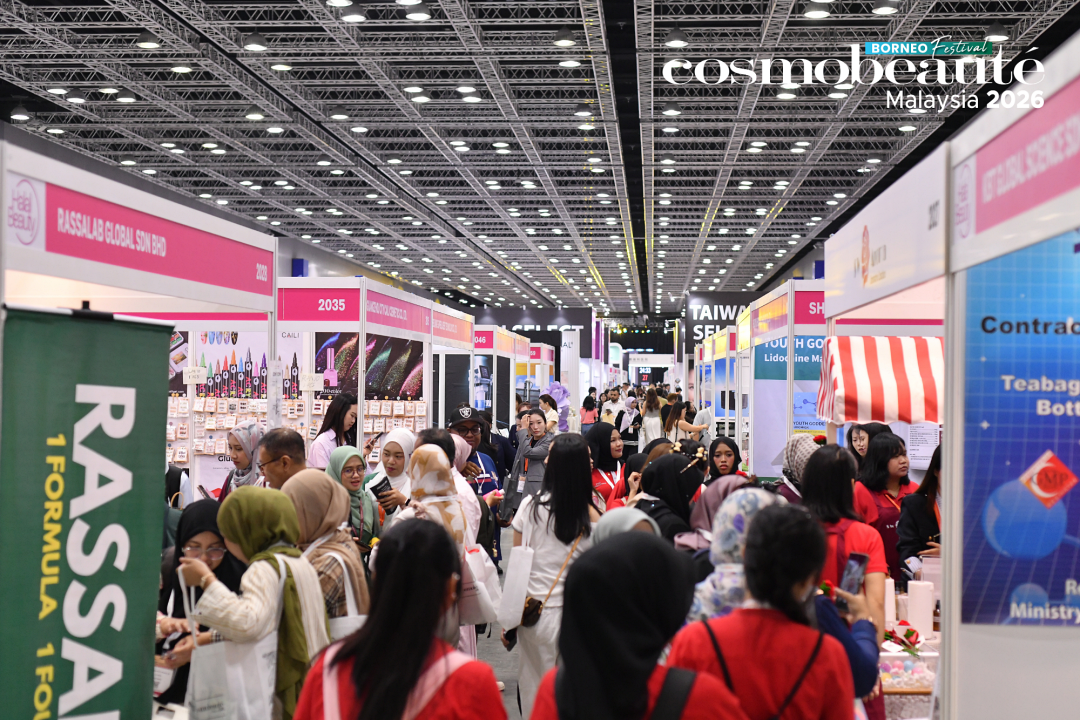
Cosmobeauté Malaysia and beautyexpo will expand into East Malaysia with the launch of the Cosmobeauté Malaysia Borneo Festival 2026 at the Sabah International Convention Centre (SICC) from May 25 to 26.
Advertisement
Advertisement
 Rising approximately sixty-five metres above ground, this tower symbolises Mount Meru, the mythical axis mundi in Hindu and Buddhist cosmology, regarded as the centre of the universe and the abode of the divine.
In Vasthu, we speak of the Brahmasthan, the central energy field of any structure.
This is the most sacred and powerful point within a building, where cosmic energy converges and radiates outward.
It must remain open, balanced, and undisturbed, for it governs harmony throughout the entire space.
Drawn by an inner calling, I ascended to the upper sanctuary. I removed my shoes and stepped barefoot onto the ancient stone.
Standing at the very centre, hands clasped in prayer, I felt an unusual surge of spiritual energy.
It came almost immediately, subtle yet powerful, a quiet current rising through the soles of my feet into my being.
It was not dramatic, not theatrical, but unmistakable.
The stillness was alive. The stone beneath my feet seemed charged with centuries of devotion and reverence.
There was a sacred intimacy in that moment, something deeply personal and beyond articulation.
It was an encounter that could be felt but not revealed, a holy communion between space and soul, where words fall away and only awareness remains.
In that moment, I realised I was standing at the centre of one of the greatest sacred structures ever conceived.
The central tower serves as the vertical axis, connecting heaven and earth.
Rising approximately sixty-five metres above ground, this tower symbolises Mount Meru, the mythical axis mundi in Hindu and Buddhist cosmology, regarded as the centre of the universe and the abode of the divine.
In Vasthu, we speak of the Brahmasthan, the central energy field of any structure.
This is the most sacred and powerful point within a building, where cosmic energy converges and radiates outward.
It must remain open, balanced, and undisturbed, for it governs harmony throughout the entire space.
Drawn by an inner calling, I ascended to the upper sanctuary. I removed my shoes and stepped barefoot onto the ancient stone.
Standing at the very centre, hands clasped in prayer, I felt an unusual surge of spiritual energy.
It came almost immediately, subtle yet powerful, a quiet current rising through the soles of my feet into my being.
It was not dramatic, not theatrical, but unmistakable.
The stillness was alive. The stone beneath my feet seemed charged with centuries of devotion and reverence.
There was a sacred intimacy in that moment, something deeply personal and beyond articulation.
It was an encounter that could be felt but not revealed, a holy communion between space and soul, where words fall away and only awareness remains.
In that moment, I realised I was standing at the centre of one of the greatest sacred structures ever conceived.
The central tower serves as the vertical axis, connecting heaven and earth.
 In Vasthu terms, this is akin to the Sushumna channel in the human body, the subtle spine through which pranic energy flows.
When the vertical axis of a structure is strong and unobstructed, it uplifts consciousness. When disturbed in a residence or building, it can manifest as instability, confusion, or imbalance in the lives of its occupants.
Angkor Wat demonstrates what becomes possible when this axis is honoured with precision and reverence. The over 900-year-old structure does not merely stand tall; it radiates equilibrium.
The temple complex itself unfolds along a grand east–west axis.
Interestingly, unlike most Khmer temples that face east, Angkor Wat faces west, the sacred direction associated with Lord Vishnu, to whom the temple was originally dedicated.
In Vasthu Sastra, direction is not symbolic; it is energetic.
Each direction carries elemental and planetary influences.
The east is governed by the rising sun, symbolising vitality, growth, and new beginnings.
The west carries a more introspective and stabilising quality, associated with depth and preservation.
Angkor Wat’s westward orientation reflects intentionality, not deviation.
It aligns devotionally and cosmologically with the energy of Vishnu, preservation, order, and cosmic balance.
Even more remarkable is its astronomical precision. During the spring and autumn equinoxes, the rising sun aligns directly over the central tower when viewed from the western entrance causeway.
This is not accidental architecture. It is a holy design in dialogue with celestial rhythm.
In Vasthu, we emphasise that buildings must align with the sun’s movement, the earth’s magnetic field, and the five elements — earth, water, fire, air, and space.
When design mirrors cosmic order, harmony flows naturally. When alignment is ignored, discord inevitably follows.
Angkor Wat stands as a monumental testament to what happens when architecture is conceived as sacred science rather than mere construction.
Yet the deepest lesson I carried was truly personal.
Standing at the central axis, which is regarded as the centre of the universe, I felt that the temple’s design mirrors the human being.
Just as Angkor Wat has its vertical axis and sacred centre, so do we.
Our spine is our inner tower. Our heart is our Brahmasthan. When we stand upright, centred, and aligned in thought and action, we become our own mandala, balanced, grounded, and luminous.
As the sun climbed higher and the crowds thickened, I descended from the sanctuary carrying no tangible souvenir.
What I carried instead was a renewed understanding: alignment is not an abstract concept reserved for temples of stone. It is a principle to be lived.
Angkor Wat’s sunrise was not merely a spectacle of light.
It was a reminder that when heaven, earth, and human intention meet at the right axis, harmony is not forced. It simply flows.
Award-winning writer Dr T. Selva is the author of the bestsellers Vasthu Sastra Guide and Secrets of Happy Living. To get a copy, WhatsApp 019-2728464. He can be reached at drtselvas@gmail.com. Facebook: Vasthu Sastra
In Vasthu terms, this is akin to the Sushumna channel in the human body, the subtle spine through which pranic energy flows.
When the vertical axis of a structure is strong and unobstructed, it uplifts consciousness. When disturbed in a residence or building, it can manifest as instability, confusion, or imbalance in the lives of its occupants.
Angkor Wat demonstrates what becomes possible when this axis is honoured with precision and reverence. The over 900-year-old structure does not merely stand tall; it radiates equilibrium.
The temple complex itself unfolds along a grand east–west axis.
Interestingly, unlike most Khmer temples that face east, Angkor Wat faces west, the sacred direction associated with Lord Vishnu, to whom the temple was originally dedicated.
In Vasthu Sastra, direction is not symbolic; it is energetic.
Each direction carries elemental and planetary influences.
The east is governed by the rising sun, symbolising vitality, growth, and new beginnings.
The west carries a more introspective and stabilising quality, associated with depth and preservation.
Angkor Wat’s westward orientation reflects intentionality, not deviation.
It aligns devotionally and cosmologically with the energy of Vishnu, preservation, order, and cosmic balance.
Even more remarkable is its astronomical precision. During the spring and autumn equinoxes, the rising sun aligns directly over the central tower when viewed from the western entrance causeway.
This is not accidental architecture. It is a holy design in dialogue with celestial rhythm.
In Vasthu, we emphasise that buildings must align with the sun’s movement, the earth’s magnetic field, and the five elements — earth, water, fire, air, and space.
When design mirrors cosmic order, harmony flows naturally. When alignment is ignored, discord inevitably follows.
Angkor Wat stands as a monumental testament to what happens when architecture is conceived as sacred science rather than mere construction.
Yet the deepest lesson I carried was truly personal.
Standing at the central axis, which is regarded as the centre of the universe, I felt that the temple’s design mirrors the human being.
Just as Angkor Wat has its vertical axis and sacred centre, so do we.
Our spine is our inner tower. Our heart is our Brahmasthan. When we stand upright, centred, and aligned in thought and action, we become our own mandala, balanced, grounded, and luminous.
As the sun climbed higher and the crowds thickened, I descended from the sanctuary carrying no tangible souvenir.
What I carried instead was a renewed understanding: alignment is not an abstract concept reserved for temples of stone. It is a principle to be lived.
Angkor Wat’s sunrise was not merely a spectacle of light.
It was a reminder that when heaven, earth, and human intention meet at the right axis, harmony is not forced. It simply flows.
Award-winning writer Dr T. Selva is the author of the bestsellers Vasthu Sastra Guide and Secrets of Happy Living. To get a copy, WhatsApp 019-2728464. He can be reached at drtselvas@gmail.com. Facebook: Vasthu Sastra


