


Advertisement
 She said the former offenders were upbraided because their workers did not possess valid food handler cards and health certificates, or because the grease traps in their kitchens were not being properly maintained.
SPONSORED CONTENT
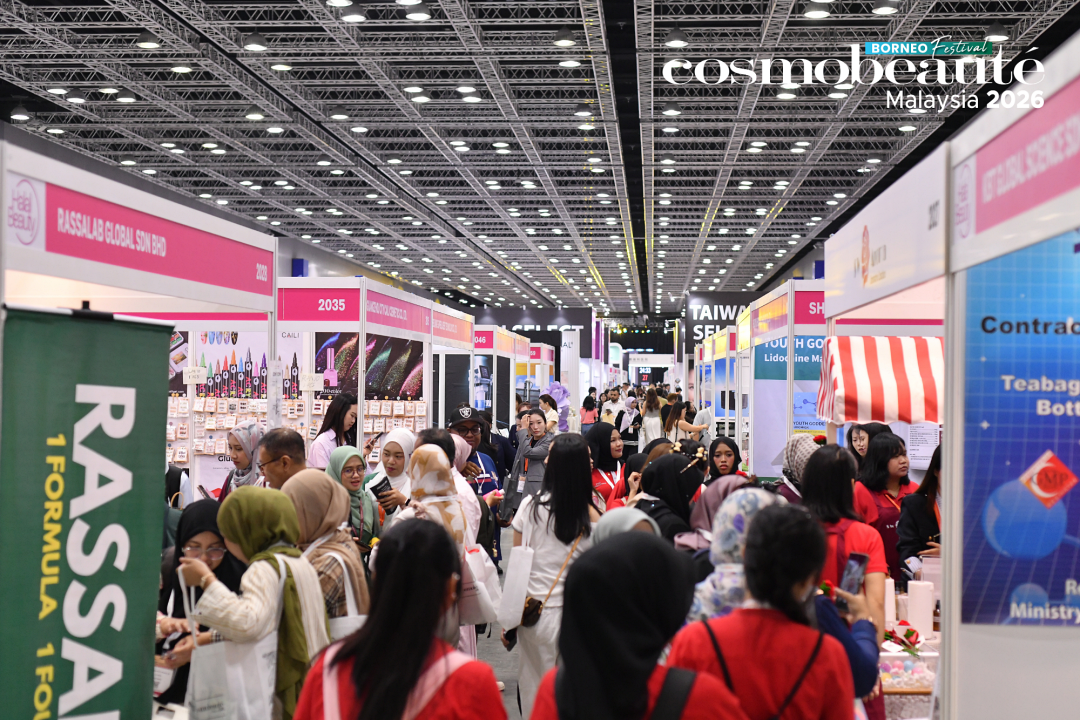
Cosmobeauté Malaysia and beautyexpo will expand into East Malaysia with the launch of the Cosmobeauté Malaysia Borneo Festival 2026 at the Sabah International Convention Centre (SICC) from May 25 to 26.
Advertisement
Advertisement
 Since 2014, the agency has been using the Federal Ministry of Local Government and Housing’s Food Premises Grading System (FPGS) to assess the cleanliness of eateries within its rating area.
Premises owners are awarded marks for fulfilling the criteria set out in seven separate categories as part of the grading score sheet.
Under the FPGS, an “A” – between 100-86 per cent of the total score – indicates that the premises is “amat bersih (extremely clean)”, while a “D” – 50 per cent or below – indicates that it is “tidak bersih (unclean)”.
“Eateries, which earn between 85-71 per cent, are considered ‘bersih (clean)’, per the Ministry’s guidelines,” the spokeswoman said.
She called on food operators to pull up their socks when it came to the cleanliness of their eateries and the safety of the meals they served.
The spokeswoman said the agency had updated the conditions of the licences for food premises to include provisions for pest control and the cleanliness of toilets at eateries around the State Capital.
“Extermination exercises should be performed at least once every six months and no traces of rodents, be they rats, cockroaches or flies, should be evident inside these outlets.
“On top of this, operators must achieve a grade of at least 60 per cent under the FPGS and a ‘four’ minimum rating for the toilets at their eateries.”
The agency has adopted the Ministry’s “Star Rating (SR)” system when assessing the cleanliness of toilets in public places within its rating area. Premises owners are awarded marks for fulfilling the criteria set out in six separate categories as part of the SR score sheet.
Since 2014, the agency has been using the Federal Ministry of Local Government and Housing’s Food Premises Grading System (FPGS) to assess the cleanliness of eateries within its rating area.
Premises owners are awarded marks for fulfilling the criteria set out in seven separate categories as part of the grading score sheet.
Under the FPGS, an “A” – between 100-86 per cent of the total score – indicates that the premises is “amat bersih (extremely clean)”, while a “D” – 50 per cent or below – indicates that it is “tidak bersih (unclean)”.
“Eateries, which earn between 85-71 per cent, are considered ‘bersih (clean)’, per the Ministry’s guidelines,” the spokeswoman said.
She called on food operators to pull up their socks when it came to the cleanliness of their eateries and the safety of the meals they served.
The spokeswoman said the agency had updated the conditions of the licences for food premises to include provisions for pest control and the cleanliness of toilets at eateries around the State Capital.
“Extermination exercises should be performed at least once every six months and no traces of rodents, be they rats, cockroaches or flies, should be evident inside these outlets.
“On top of this, operators must achieve a grade of at least 60 per cent under the FPGS and a ‘four’ minimum rating for the toilets at their eateries.”
The agency has adopted the Ministry’s “Star Rating (SR)” system when assessing the cleanliness of toilets in public places within its rating area. Premises owners are awarded marks for fulfilling the criteria set out in six separate categories as part of the SR score sheet.
 Under the SR system, a grade of five stars – between 91-100 per cent of the total score – indicates that the toilets are “amat bersih (extremely clean)”, while zero stars – 50 per cent or below – indicates that these facilities are “kotor (dirty)”.
The spokeswoman hoped eatery operators would, at least, consistently attain 81-90 per cent of the score.
“This will allow them to achieve the ‘four stars’ which shows that their toilets are ‘bersih (clean)’. The Ministry previously aimed for toilets nation-wide to achieve a grade of ‘three stars’ but they raised the target to ‘four stars’ in 2022.”
Under the SR system, a grade of five stars – between 91-100 per cent of the total score – indicates that the toilets are “amat bersih (extremely clean)”, while zero stars – 50 per cent or below – indicates that these facilities are “kotor (dirty)”.
The spokeswoman hoped eatery operators would, at least, consistently attain 81-90 per cent of the score.
“This will allow them to achieve the ‘four stars’ which shows that their toilets are ‘bersih (clean)’. The Ministry previously aimed for toilets nation-wide to achieve a grade of ‘three stars’ but they raised the target to ‘four stars’ in 2022.”


