


Advertisement

 A spokeswoman for the agency’s Environmental Health Department (EHD) said, as of Monday, 25 residents in Kg Warisan Phase 1 had contracted mosquito-borne disease. By comparison, four cases were reported in Kg Rampayan Laut, according to her.
SPONSORED CONTENT
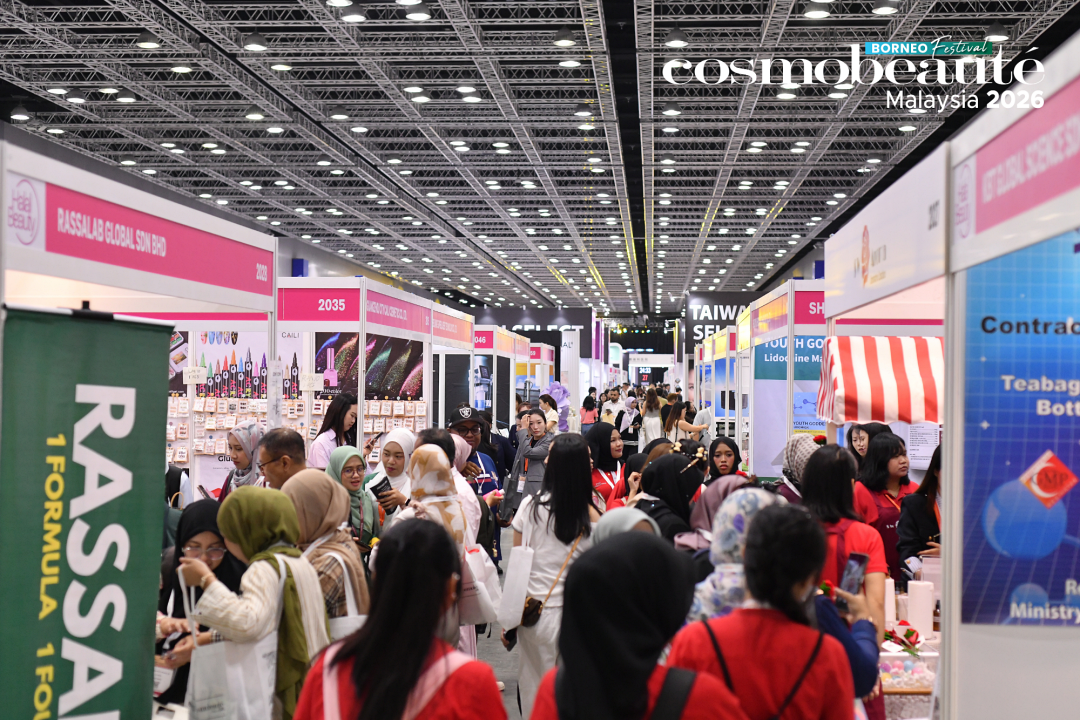
Cosmobeauté Malaysia and beautyexpo will expand into East Malaysia with the launch of the Cosmobeauté Malaysia Borneo Festival 2026 at the Sabah International Convention Centre (SICC) from May 25 to 26.
Advertisement
 The spokeswoman said the village residents were given a grace-period to clean up the verges beside their homes.
Advertisement
 Fire and Rescue Services Department (FRSD) personnel were also present, according to her.
“All those in attendance were keen to get the word out to the local community about the importance of keeping the number of mosquitoes in their respective areas to a minimum”.
She said a 46-man strong City Hall-PKKK-FRSD team worked together with the public to conduct a “gotong-royong (community cleanup)” in Kg Warisan and Taman Puri Warisan.
“Two open trucks each were provided by our Solid Waste Management and Landscaping Departments was deployed to remove the discarded items.”
She said the former also placed a ‘roll-on-roll-off (RORO)’ bin at the village and flats to facilitate this effort.
A PKKK spokeswoman said its officers worked together with their EHD peers to get rid of any items which could become potential breeding grounds for Aedes mosquitoes at Kg Warisan Phase 1 and Taman Puri Warisan.
“Kg Warisan Phase 1 has been declared a ‘hotspot’ for dengue,” she said. “A locality is dubbed a ‘hotspot’, if cases keep cropping up past the 30-day point.”
She explained that a “wabak” (outbreak) was deemed to have occurred in a particular area if two or more dengue cases were reported within a 200metre radius.
“The outbreak would be considered closed, if no one else in this area comes down with the disease in the following two weeks. Should the opposite happen, then the situation will be categorised as a ‘wabak tidak terkawal (rampant outbreak)’.”
The spokeswoman said no larvae samples were taken from any of the homes at either the village or flats during the Operation.
“Any samples taken are tested at the Health Department’s laboratories. A positive result would see the owner of the premises compounded up to RM500, under the Disease-bearing Insects Act 1975.”
Fire and Rescue Services Department (FRSD) personnel were also present, according to her.
“All those in attendance were keen to get the word out to the local community about the importance of keeping the number of mosquitoes in their respective areas to a minimum”.
She said a 46-man strong City Hall-PKKK-FRSD team worked together with the public to conduct a “gotong-royong (community cleanup)” in Kg Warisan and Taman Puri Warisan.
“Two open trucks each were provided by our Solid Waste Management and Landscaping Departments was deployed to remove the discarded items.”
She said the former also placed a ‘roll-on-roll-off (RORO)’ bin at the village and flats to facilitate this effort.
A PKKK spokeswoman said its officers worked together with their EHD peers to get rid of any items which could become potential breeding grounds for Aedes mosquitoes at Kg Warisan Phase 1 and Taman Puri Warisan.
“Kg Warisan Phase 1 has been declared a ‘hotspot’ for dengue,” she said. “A locality is dubbed a ‘hotspot’, if cases keep cropping up past the 30-day point.”
She explained that a “wabak” (outbreak) was deemed to have occurred in a particular area if two or more dengue cases were reported within a 200metre radius.
“The outbreak would be considered closed, if no one else in this area comes down with the disease in the following two weeks. Should the opposite happen, then the situation will be categorised as a ‘wabak tidak terkawal (rampant outbreak)’.”
The spokeswoman said no larvae samples were taken from any of the homes at either the village or flats during the Operation.
“Any samples taken are tested at the Health Department’s laboratories. A positive result would see the owner of the premises compounded up to RM500, under the Disease-bearing Insects Act 1975.”


