Advertisement
SPONSORED CONTENT
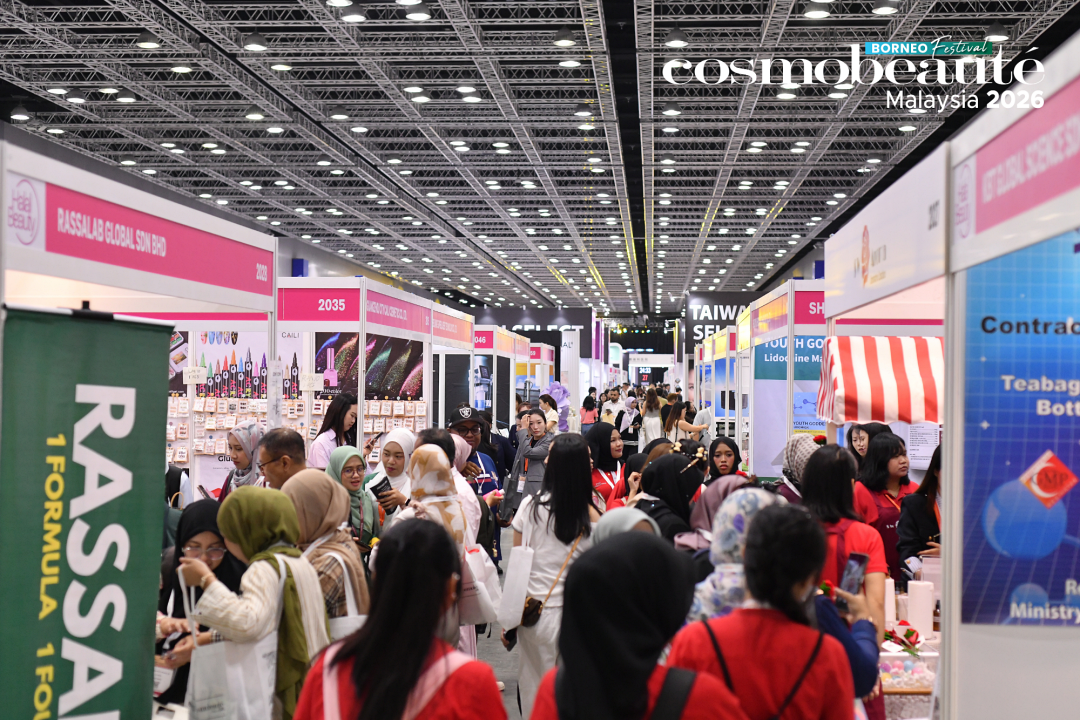
Cosmobeauté Malaysia and beautyexpo will expand into East Malaysia with the launch of the Cosmobeauté Malaysia Borneo Festival 2026 at the Sabah International Convention Centre (SICC) from May 25 to 26.
Advertisement
Advertisement

Bong-jin, the founder of South Korea's food-delivery app Woowa Brothers.
“When the country was just reeling from the war, the priority was survival, not philanthropy, and working with your own family members was seen as the most efficient way of running a business,” Jangwoo Lee, a business administration professor at Kyungpook National University, told AFP. But both Kim Beom-su and Kim Bong-jin have been at the forefront of South Korea’s social media and mobile tech industries boom, each founding their company in 2010 and rapidly accumulating a fortune. Kakao’s flagship messaging application is installed on more than 90 per cent of phones in the country. Woowa owns South Korea’s biggest food delivery app, with more than 10 million monthly users – around 20 per cent of the population. The children of Kakao’s Kim have been appointed to positions in his holding company, but professor Lee said chaebol-style succession was effectively obsolete for such firms. “Family-oriented management strategies may have worked for manufacturing businesses, but we have now entered an era where newly emerging enterprises do not really benefit from such ways,” he said. “These are creative and unpredictable industries, and they need specialists, not family members, in leadership in order to thrive.” That could give their owners more flexibility with their assets. According to the Washington-based Institute for Policy Studies, most donations under the Giving Pledge have gone to private foundations controlled by donors’ relatives, or donor-advised funds, enabling the givers to “retain significant managerial control over millions of philanthropic dollars” while generating “hefty tax reductions”. South Korean law also offers donors some tax benefits, depending on the beneficiaries and how giving is structured. Some chaebol families have engaged in high-profile philanthropy. Hyundai Motor’s honorary chairman Chung Mong-Koo endowed an eponymous foundation with his personal assets and the Samsung group – South Korea’s biggest conglomerate – founded the Leeum, Samsung Museum of Art in Seoul, home to an extensive collection of antiquities and modern works. But critics say South Korea is becoming an increasingly unequal society. Kakao’s Kim was among those who grew up poor. Neither of his parents attended high school, and they took multiple blue-collar jobs to make ends meet, leaving him to be cared for mostly by his grandmother. All eight members of the family shared a single room, and later he sometimes could not afford to buy lunch as a student at the prestigious Seoul National University. Vladimir Tikhonov, professor of Korean Studies at the University of Oslo, said the South Koreans’ moves were a “display of public-mindedness on the part of the self-made rich men”. “Meritocratic billionaires have something that rich heirs do not.”