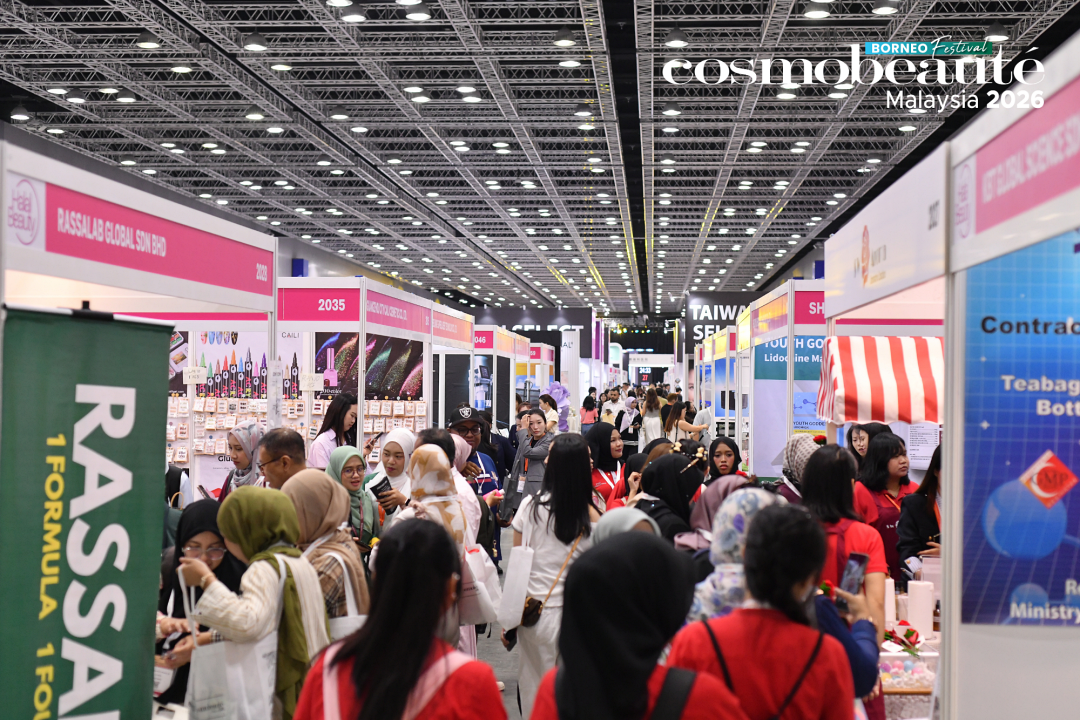
Kota Kinabalu: The halal industry has emerged as one of the fastest-growing sectors worldwide, extending beyond food and beverages to include cosmetics, pharmaceuticals, logistics, finance, and tourism.
According to statistics from the Malaysia Digital Economy Corporation (MDEC), the global halal market’s value is over US$2 trillion annually, and they project it to reach US$2.8 trillion in the coming years.
Growth in the halal market is driven by the expansion of halal products and services, which are now consumed not only by Muslims but also by non-Muslims who value safety, hygiene, and ethical assurance associated with halal standards.
Malaysia has long been at the forefront of this industry. It has earned a reputation as a global halal hub, with the Department of Islamic Development Malaysia (Jabatan Kemajuan Islam Malaysia (JAKIM), the halal certification authority in Malaysia, recognised by over 47 countries and 84 certification bodies worldwide.
In 2019, halal food and beverages generated RM22.05 billion in revenue in Malaysia, according to the Halal Development Corporation (HDC), and exports reached RM20 billion the year before.

This achievement and acknowledgement not only demonstrate the credibility of Malaysia’s halal standards but also reinforce its position as a global leader in the halal economy.
Within this national context, Sabah is positioning itself to play a stronger role in contributing to Malaysia’s halal economy.
The development of halal management in Sabah has progressed significantly over the decades. Initially, halal matters were managed under the Prime Minister’s Department at the federal level. In Sabah, responsibility first fell under the Majlis Ugama Islam Sabah (MUIS) and, with the establishment of the Jabatan Hal Ehwal Agama Islam Negeri Sabah (JHEAINS) in 1996, halal certification became more structured.
In 2020, MUIS approved the establishment of the MUIS Halal Hub (MHH), and the hub officially launched in 2021.
The MHH was designed to centralise halal certification, improve the efficiency of application processing, ensure the integrity and trustworthiness of certification, and support Small and Medium Enterprises (SME)’ participation in the halal economy.
The MHH intends to promote halal industries across multiple sectors, going beyond accreditation, to drive Sabah’s economic development.
With the establishment of the MHH, the state’s involvement in halal tourism and agro-based exports, and its strategic location within the Brunei Darussalam-Indonesia-Malaysia-Philippines East ASEAN Growth Area (BIMP-EAGA) subregion are setting the platform for Sabah to emerge as a key halal player in the years to come.
Sabah Industries’ Opportunity Sabah’s strategic advantages position it well to expand its role in the halal economy. Geographically, Sabah serves as a gateway to Borneo, with proximity to Brunei, Kalimantan (Indonesia), and the southern Philippines.
Thus, Sabah can become a logistics and distribution hub for halal products and services within the BIMP-EAGA framework across the region. Logistics is a vital sector, particularly in halal supply chain management, ensuring the integrity and purity of products from producers to final consumers.
This involves a set of stringent, Shariah-compliant principles that go beyond conventional logistics to prevent any contamination with non-halal (forbidden) elements. Additionally, a large Muslim population also makes a strong domestic demand base.
Ensuring that halal products are handled, stored, and transported in full compliance with Islamic principles helps build trust and enhances competitiveness in international trade.
Furthermore, the prestige of halal products among non-Muslim Sabahan consumers as symbols of quality and ethical practices broadens Sabah’s market opportunities.
Tourism is an additional sector where Sabah can leverage halal principles to strengthen its appeal.
From January to September 2025, Sabah Tourism Board (STB) recorded nearly three million visitors to the state. With the increasing number of visitors and the global rise of halal tourism, Sabah could offer opportunities to incorporate more halal-certified hotels, restaurants, crafts, and Muslim-friendly travel services into its eco-tourism offerings.
Beyond logistics and tourism, Sabah’s halal industry has opportunities in other sectors such as cosmetics and pharmaceuticals.
The global halal cosmetics market is growing rapidly, with the Asia-Pacific region dominating at 64.07%, driven by its large Muslim population, rising demand for natural ingredients, and growing consumer awareness in Malaysia and other countries such as India, Indonesia, and China in 2024.
This also fuels growing consumer demand for ethical, safe, and sustainable products. Sabah’s entrepreneurs can enter this market by developing brands that emphasize halal integrity.
Halal pharmaceuticals and wellness products, on the other hand, provide Sabah with an opportunity to diversify its economy. With its rich biodiversity from terrestrial to marine resources, Sabah can become a hub for halal-certified ingredients for remedies.
Collaborations among local research institutions, universities, and halal certification bodies can further enhance innovation and ensure compliance with global standards.
Innovation and social entrepreneurship present strategic opportunities for Sabah’s halal economy by aligning with the Malaysia Social Entrepreneurship Blueprint 2030, which emphasises enterprises that balance profitability with social and environmental impact.
In Sabah, where grassroots communities, smallholders, and coastal producers are vital economic contributors, halal social enterprises can serve as an effective mechanism for inclusive growth by integrating into halal-certified supply chains and strengthening community resilience.
For instance, value-added halal seafood products, such as frozen ready-to-eat meals, could give Sabah a unique identity in global halal trade by leveraging its rich marine resources.
Digital transformation further enhances this potential, as halal SMEs that adopt e-commerce platforms, digital certification systems, and data-driven branding can overcome geographic limitations, expand their market reach, and improve traceability and transparency, which are the key factors for global competitiveness and sustainable participation in the halal value chain.
Issues and Challenges
Certification remains one of the most pressing issues in strengthening the halal economy in Sabah, compounded by low awareness and misconceptions identified among consumers and business owners alike.
Studies by JAKIM show that many Bumiputera SMEs in Sabah remain hesitant to pursue halal certification because of perceived high costs, complex procedures, and limited understanding of the process.
A broader misconception persists among consumers who equate “pork-free” or “Muslim-friendly” establishments with halal compliance.
This gap in both business participation and consumer awareness undermines confidence in the halal ecosystem and limits Sabah’s ability to fully harness the halal economy’s potential.
Infrastructure also one of the most critical challenges in advancing Sabah’s halal economy, as logistics and supply chain integrity are vital to maintaining halal standards.
Sabah’s scattered rural settlements and its geographical features make logistics difficult, particularly for perishable halal goods such as seafood and agro-based products.
As highlighted by Hopes Malaysia (2025), many rural areas still lack reliable roads, clean water, and electricity, which isolates producers from markets and disrupts the consistent flow of goods to processing and export facilities.
Poor connectivity not only increases costs but also undermines product integrity and competitiveness in global halal markets.
While Sabah’s halal development has primarily focused on food and beverages, significant awareness and policy gaps remain in potential sectors such as cosmetics, pharmaceuticals, logistics, finance, craft, and tourism.
These industries represent major global growth areas within the halal economy. Yet, in Sabah, they remain underdeveloped because of limited understanding among businesses, weak policy guidance, and the absence of targeted state-level frameworks.
For example, halal cosmetics and pharmaceuticals have shown immense potential nationally, but Sabah lacks certified producers and facilities to meet international standards.
In the same way, the state’s infrastructure still poorly integrates halal logistics and traceability systems, which are crucial for export credibility.
Sabah’s craft industry, one of Malaysia’s top three and generating over RM63 million in annual sales from more than 1,700 artisans, has strong potential to integrate into the halal economy through certification, ethical branding, and tourism linkage, but it must address policy alignment and market connectivity challenges to unlock its global halal lifestyle potential.
In tourism, although Sabah is rich in natural attractions and positioned as a leading eco-tourism destination, few operators are aware of the benefits of halal certification or the growing market for Muslim-friendly services.
The lack of a Sabah-specific halal development policy or incentives has led to fragmented implementation of federal initiatives such as the Halal Industry Master Plan 2030.
To enhance its role in the halal economy, Sabah has an opportunity to implement a coordinated, inclusive strategy that addresses key challenges in certification, infrastructure, and policy.
By fostering collaboration among MUIS, JAKIM, and other agencies, Sabah can streamline the certification process, enhance enforcement, and bolster SME capacity through targeted training and digitalisation initiatives.
Investing in halal-compliant logistics, industrial parks, and traceability systems will be essential for ensuring product integrity and increasing exports.
Furthermore, by diversifying into emerging sectors such as cosmetics, pharmaceuticals, crafts, and halal tourism, Sabah can unlock new economic opportunities. Creating a Sabah-specific Halal Development Blueprint aligned with the Halal Industry Master Plan 2030 offers a promising pathway for the state.
Leveraging its strategic location within BIMP-EAGA, Sabah can establish itself as an inclusive, competitive, and globally recognised halal hub, driving sustainable economic growth and benefiting the community at large.