


Advertisement

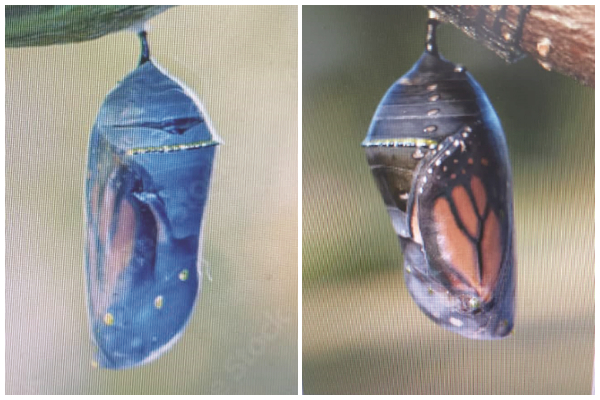 Left pic: Stage 3 – Chrysalis, where a caterpillar digests itself into a pulp for a radical transformation into a beautiful butterfly. Right pic: Close-up of a chrysalis where metamorphosis – the symphony of miracles – radically transforms a caterpillar into a spectacular butterfly.
Advertisement
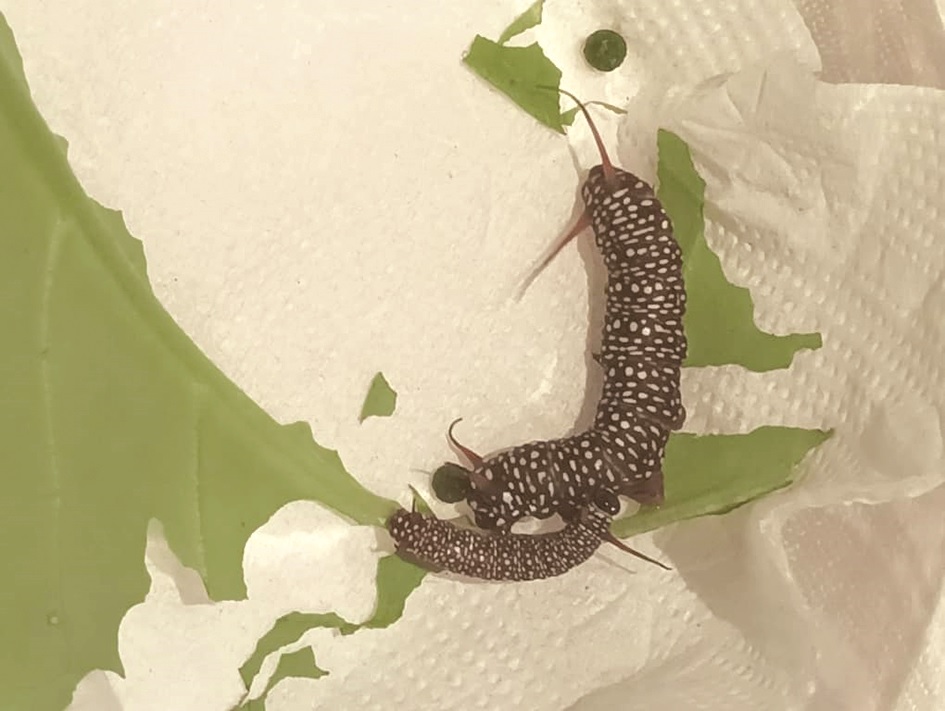 A caterpilar chomping leaves away.
Advertisement
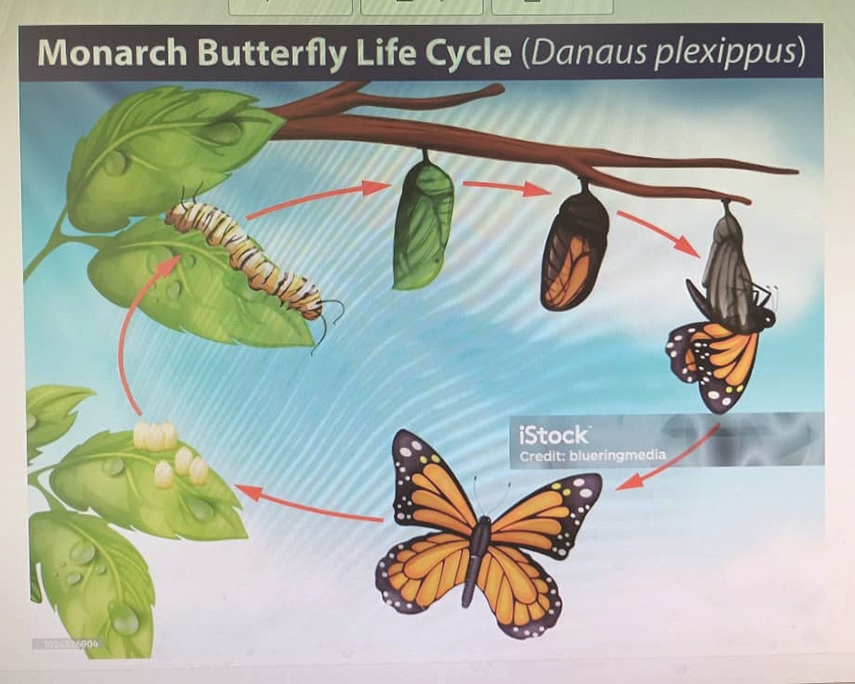 Graphic on a four-stage life cycle of a Monarch butterfly: Egg, caterpillar, pupa then adult.
The price is like shedding all its drawbacks when the pupa literally digest itself into a “gruesome mush” inside the hidden space of a cocoon called chrysalis, in order to reach for its maximum potentials to get mounted with wings and fly off as the prettiest insects on the planet!
What triggered the idea for this story was a small exhibit on the side line showcasing a few caterpillars chomping away on leaves in a couple of glass casings didn’t escape the notice of this writer.
So it’s just lending the power of the pen to highlight the inspirational value of metamorphosis.
Metamorphosis through lens of a fascinated writer
A quick Google check found there’s no shortage of writers who already knew the subject.
For example, Gym Tan, a former fashion executive, Hong Kong, is the one who noted how a caterpillar digest itself in a cocoon to reconstruct itself for something better.
“From a very young age I have been fascinated with the whole process by which a butterfly emerges and the frantic changes that it goes through in the entire process,” the source identified only as Gymstan begins.
“The butterfly starts life as a tiny egg.”
A careful mother butterfly
“Mother butterfly carefully selects the leaves in which it lays its eggs, giving priority to the leaves that are rich in nutrients which are required as the egg hatches.
“The egg hatches and the caterpillar comes out marking the second stage in the metamorphosis process.
“The caterpillar begins to feed and grow. The joints between its body segments distend and this activates hormones.”
Graphic on a four-stage life cycle of a Monarch butterfly: Egg, caterpillar, pupa then adult.
The price is like shedding all its drawbacks when the pupa literally digest itself into a “gruesome mush” inside the hidden space of a cocoon called chrysalis, in order to reach for its maximum potentials to get mounted with wings and fly off as the prettiest insects on the planet!
What triggered the idea for this story was a small exhibit on the side line showcasing a few caterpillars chomping away on leaves in a couple of glass casings didn’t escape the notice of this writer.
So it’s just lending the power of the pen to highlight the inspirational value of metamorphosis.
Metamorphosis through lens of a fascinated writer
A quick Google check found there’s no shortage of writers who already knew the subject.
For example, Gym Tan, a former fashion executive, Hong Kong, is the one who noted how a caterpillar digest itself in a cocoon to reconstruct itself for something better.
“From a very young age I have been fascinated with the whole process by which a butterfly emerges and the frantic changes that it goes through in the entire process,” the source identified only as Gymstan begins.
“The butterfly starts life as a tiny egg.”
A careful mother butterfly
“Mother butterfly carefully selects the leaves in which it lays its eggs, giving priority to the leaves that are rich in nutrients which are required as the egg hatches.
“The egg hatches and the caterpillar comes out marking the second stage in the metamorphosis process.
“The caterpillar begins to feed and grow. The joints between its body segments distend and this activates hormones.”
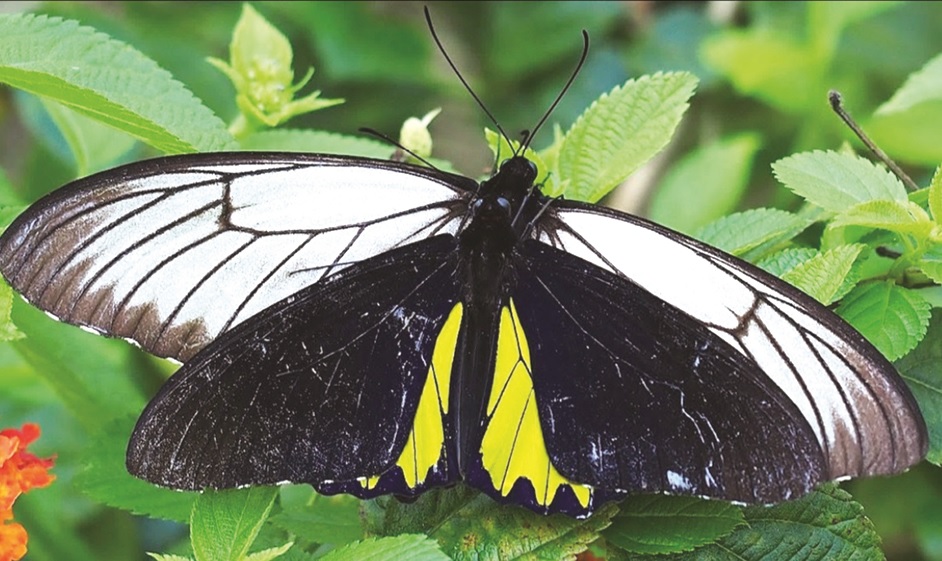 A mating pair of Sabah’s State butterfly, Troides andromache. (Pic: Steven Bosuang)
“The skin of the caterpillar splits and a worm-like creature emerges from the split.
“The caterpillar continues eating and this process of eating and splitting continues for five times within a very short period.”
“During this period the caterpillar increases it weight 3,000 times it original hatching weight which is equivalent to a 4kg new born baby growing to 12kg size.”
Where caterpillar digests itself for reconstruction
“The next change of the cocoon sees another radical transformation with the wing disks and the antennae growing.
“The simple eye dissolves and is replaced by a very complex one. The legs lengthen and grow segments.”
A seemingly serene space encased inside a cocoon isn’t quite peaceful, in fact, drastic changes takes place here.
“The cocoon is where a caterpillar literally digests itself into a ‘gruesome mush’ or a thick soft substance so that it can reconstruct itself into something else – a period of struggle and reconstruction.”
Insights from Florida
A Florida Museum article notes that metamorphosis is not limited to butterflies. It happens also in bees, flies, mosquitos, cicadas, wasps, beetles, moths etc which undergo complete metamorphosis, a total self-reconstruction that liberate them from the shackles of their limitations through constructive destruction.
Whichever the insect, the life cycle involves the same four separate stages – egg, larva, pupa and adult and highlight some interesting insights.
“Each stage looks completely different and serves a different purpose in life.”
A mating pair of Sabah’s State butterfly, Troides andromache. (Pic: Steven Bosuang)
“The skin of the caterpillar splits and a worm-like creature emerges from the split.
“The caterpillar continues eating and this process of eating and splitting continues for five times within a very short period.”
“During this period the caterpillar increases it weight 3,000 times it original hatching weight which is equivalent to a 4kg new born baby growing to 12kg size.”
Where caterpillar digests itself for reconstruction
“The next change of the cocoon sees another radical transformation with the wing disks and the antennae growing.
“The simple eye dissolves and is replaced by a very complex one. The legs lengthen and grow segments.”
A seemingly serene space encased inside a cocoon isn’t quite peaceful, in fact, drastic changes takes place here.
“The cocoon is where a caterpillar literally digests itself into a ‘gruesome mush’ or a thick soft substance so that it can reconstruct itself into something else – a period of struggle and reconstruction.”
Insights from Florida
A Florida Museum article notes that metamorphosis is not limited to butterflies. It happens also in bees, flies, mosquitos, cicadas, wasps, beetles, moths etc which undergo complete metamorphosis, a total self-reconstruction that liberate them from the shackles of their limitations through constructive destruction.
Whichever the insect, the life cycle involves the same four separate stages – egg, larva, pupa and adult and highlight some interesting insights.
“Each stage looks completely different and serves a different purpose in life.”
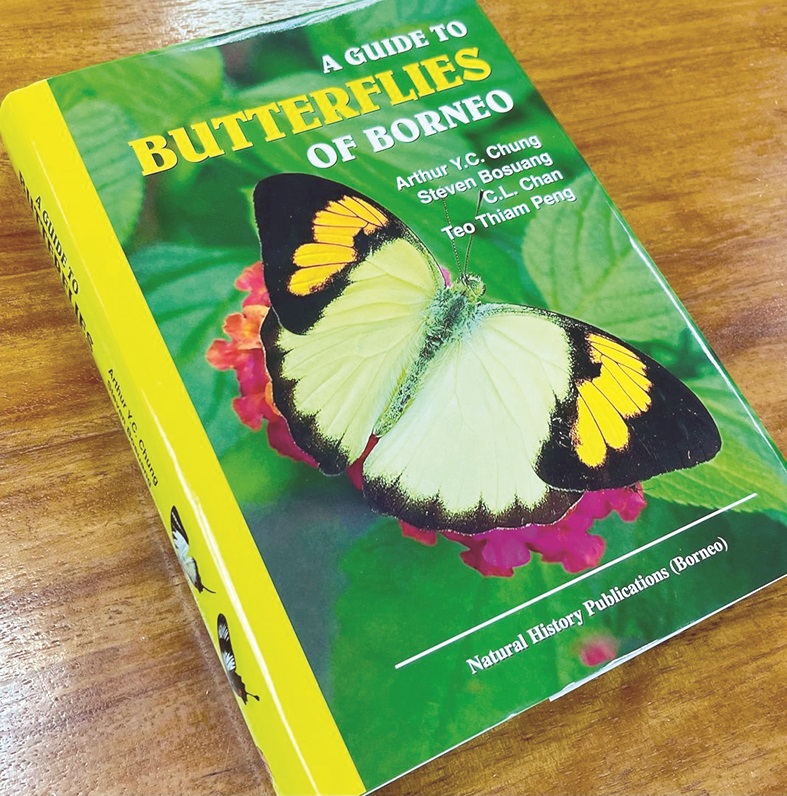 A striking pattern of an Ixias undatus male butterfly endemic to Borneo dons the cover of ‘A Guide to Butterflies of Borneo’. (Pic: Dr Steven Bosuang)
Like the previous report, mother butterfly carefully selects a suitable host plant to lay eggs, typically 200-500 eggs, prioritising leaves that are rich in nutrients.
“Most species take 3-5 days to hatch, others maybe three weeks.”
First meal – egg shells
“When the eggs hatch, larva caterpillars begin feeding, their first meals are their own egg shells, which contain essential nutrients like calcium carbonate (95pc), 3pc phosphorus, 0.3pc magnesium , traces of sodium, potassium, zinc, manganese, iron and copper that are important to grow.
“Only then it will begin eating the host plant. Almost all caterpillars eat leaves but some eat stems, root, fruits, seeds, seed pod or flowers.
“But they will eat only the host plant and will not move to any adjacent plant of a different species – even if it runs out of food! As they eat and the bodies expands, their skin which is an exoskeleton – a hard cover that supports and protects the soft body that has a limited stretching capacity, becomes tight , eventually splits and sheds, revealing its new skin beneath.
“This is called molting and occurs several times as the larva grows. Advancing to the pupa stage when the caterpillar has grown enough, it finds a protected spot, molts to cast off its outer covering for the last time, and forms an encasement in which they metamorphosis.
A striking pattern of an Ixias undatus male butterfly endemic to Borneo dons the cover of ‘A Guide to Butterflies of Borneo’. (Pic: Dr Steven Bosuang)
Like the previous report, mother butterfly carefully selects a suitable host plant to lay eggs, typically 200-500 eggs, prioritising leaves that are rich in nutrients.
“Most species take 3-5 days to hatch, others maybe three weeks.”
First meal – egg shells
“When the eggs hatch, larva caterpillars begin feeding, their first meals are their own egg shells, which contain essential nutrients like calcium carbonate (95pc), 3pc phosphorus, 0.3pc magnesium , traces of sodium, potassium, zinc, manganese, iron and copper that are important to grow.
“Only then it will begin eating the host plant. Almost all caterpillars eat leaves but some eat stems, root, fruits, seeds, seed pod or flowers.
“But they will eat only the host plant and will not move to any adjacent plant of a different species – even if it runs out of food! As they eat and the bodies expands, their skin which is an exoskeleton – a hard cover that supports and protects the soft body that has a limited stretching capacity, becomes tight , eventually splits and sheds, revealing its new skin beneath.
“This is called molting and occurs several times as the larva grows. Advancing to the pupa stage when the caterpillar has grown enough, it finds a protected spot, molts to cast off its outer covering for the last time, and forms an encasement in which they metamorphosis.
 From left: Dr Arthur Chung, Datuk Fred Kugan, Tan Jiew Hoe, Datuk CL Chan, Datin Chan and Dr Steven Bosuang.
“During this stage, most butterfly caterpillars spin what is called a chrysalis or pupa enclosed in a hard outer case where it undergoes tremendous change.
“The caterpillar releases digestive juices that break down most of its body into a “tissue cell soup” from which it miraculously develops four wings, new legs, new eyes, new mouth parts and its genitalia.”
Wing mounted adult crawls out
“Finally, the fully developed adult splits the pupal case open, crawls out and hangs upside down to facilitate stretching and drying its wings.”
But flight must wait a little.
“The adult butterfly pumps fluid into the veins of the wings to inflate them.”
“At this stage the wings are very soft and wet so the butterfly or moth must remain suspended while waiting up to two hours to dry. Once the wings are stretched and dried, the adult flies off to feed on nectar, find a mate and begin the cycle again. The average adult lifespan is two weeks but ranges from several days to as long as 11 months.”
The butterfly story: Nothing is impossible
Many people subscribe to the idea that ‘Nothing is impossible’ meaning there is no fundamental restriction on what can be achieved.
Is metamorphosis a vindication that indeed ‘Nothing is impossible’, given nature proves that even a lowly worm can be so utterly transformed into a jaw dropping beautiful flying ‘machine’ ?
British film and fashion icon Audrey Hepburn once quipped: “The word Impossible means ‘I’m possible’!
In one report, Gym Tan cited metamorphothe – Greek word for transfiguration. She sees parallels here for weak mortal humans given hope like the metamorphosis of butterflies - a pledge potential for radical change one fine day.
From left: Dr Arthur Chung, Datuk Fred Kugan, Tan Jiew Hoe, Datuk CL Chan, Datin Chan and Dr Steven Bosuang.
“During this stage, most butterfly caterpillars spin what is called a chrysalis or pupa enclosed in a hard outer case where it undergoes tremendous change.
“The caterpillar releases digestive juices that break down most of its body into a “tissue cell soup” from which it miraculously develops four wings, new legs, new eyes, new mouth parts and its genitalia.”
Wing mounted adult crawls out
“Finally, the fully developed adult splits the pupal case open, crawls out and hangs upside down to facilitate stretching and drying its wings.”
But flight must wait a little.
“The adult butterfly pumps fluid into the veins of the wings to inflate them.”
“At this stage the wings are very soft and wet so the butterfly or moth must remain suspended while waiting up to two hours to dry. Once the wings are stretched and dried, the adult flies off to feed on nectar, find a mate and begin the cycle again. The average adult lifespan is two weeks but ranges from several days to as long as 11 months.”
The butterfly story: Nothing is impossible
Many people subscribe to the idea that ‘Nothing is impossible’ meaning there is no fundamental restriction on what can be achieved.
Is metamorphosis a vindication that indeed ‘Nothing is impossible’, given nature proves that even a lowly worm can be so utterly transformed into a jaw dropping beautiful flying ‘machine’ ?
British film and fashion icon Audrey Hepburn once quipped: “The word Impossible means ‘I’m possible’!
In one report, Gym Tan cited metamorphothe – Greek word for transfiguration. She sees parallels here for weak mortal humans given hope like the metamorphosis of butterflies - a pledge potential for radical change one fine day.


